

Flu 2026 “Subclade K,” Airborne Transmission, and the Misunderstood Issue
January 7, 2026
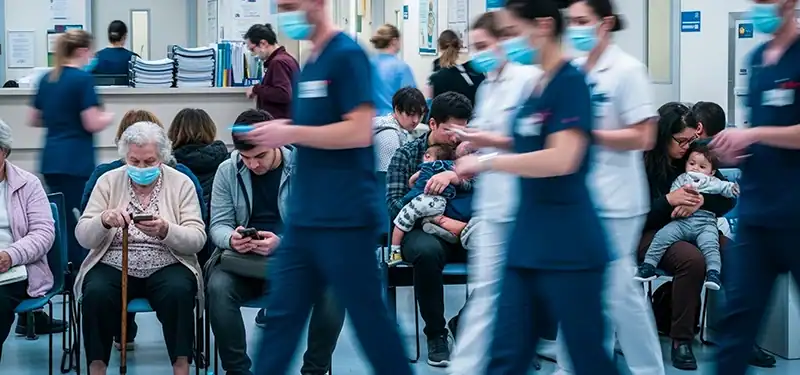
This Flu Season Has Sickened and Killed Thousands of Americans
The 2025–2026 influenza season has reached severity levels not observed in years. According to the U.S. Centers for Disease Control and Prevention (CDC), at least 11 million illnesses, 120,000 hospitalizations, and more than 5,000 deaths have occurred to date, with influenza activity expected to continue rising in many regions of the United States.1
Much of the current surge is being driven by Influenza A (H3N2), a contagious respiratory virus, including a genetically distinct subclade often referred to in the media as “Super K.” But beyond variants and headlines lies a more fundamental and still widely misunderstood issue:
Ventilation and surface cleaning alone won’t stop an airborne, respiratory virus.
How Do Respiratory Viruses Actually Spread Indoors?
Surface contamination and close contact can contribute to transmission. Hand hygiene, environmental surface disinfection, distancing, and isolation protocols remain important components of infection prevention.
However, a substantial body of scientific evidence now shows that airborne transmission through aerosolized particles is a dominant pathway for many respiratory infections in indoor environments.2–5
This understanding is reflected in guidance from the CDC, the World Health Organization (WHO), and ASHRAE, all of which recognize inhalation of infectious aerosols as a critical factor in enclosed spaces.4,5
Aerosolized Particles Are Not the Same as Droplets That Fall
Another common misunderstanding in infection control is confusion between droplets, aerosolized particles, and the term “airborne.” When people breathe, speak, cough, or sneeze, they release respiratory particles across a wide size range:2,3
- Large droplets are relatively heavy and fall quickly to the ground due to gravity, typically within seconds and within a short distance.
- Smaller particles, often called aerosolized particles or droplet nuclei (generally less than ~5 micrometers), behave very differently.
Once particles are small enough, gravity no longer removes them on a meaningful infection-control timescale. Instead, they remain suspended and move with airflow, making them readily inhalable by others sharing the same indoor air—often before ventilation, filtration, or dilution can reduce exposure.2–4
These aerosolized particles:
- Do not settle immediately
- Are generated by normal breathing, not just coughing or sneezing
- Bypass the nose and throat’s natural filtering defenses
- Penetrate deep into the lungs2,3
These aerosolized particles are what make respiratory viruses airborne indoors.
Why Ventilation Cannot React Fast Enough
Ventilation is essential for indoor air quality. Increasing outdoor air, improving airflow patterns, and meeting ventilation standards all reduce average exposure over time.
But ventilation operates on time.
Air exchange follows exponential decay, meaning contaminants are diluted gradually over minutes—not removed instantaneously.4,6 Even in buildings with excellent ventilation, high air-change rates, or 100% outside air, there is an unavoidable time gap between:
- When aerosolized pathogens are released, and
- When ventilation removes or sufficiently dilutes them
Infection can occur during that gap.4,6
This is not a failure of ventilation design. It is a fundamental physical limitation of ventilation as an infection-control mechanism. Ventilation reduces risk over time, but it does not prevent near-field exposure in the moments immediately following pathogen release.4,6
While ventilation and filtration can reduce average airborne concentrations over long periods, respiratory aerosols do not simply “clear.” They remain suspended for hours and are inhaled immediately by occupants sharing the same indoor air, often before meaningful dilution occurs even in well-ventilated or 100% outdoor-air systems. The highest risk occurs early, before air movement and dilution have time to reduce exposure, but these aerosols can continue to mix and spread throughout rooms and buildings long after release. Ventilation therefore manages long-term air quality averages but cannot be relied upon to prevent real-time airborne transmission from continuous emitters.4,6
Filtration and Surface Cleaning: Necessary, but Not Enough on Their Own
High-efficiency filtration and surface disinfection remain important parts of a layered infection-control strategy—but each has intrinsic limitations:
- Filters capture particles; they do not inactivate pathogens
- MERV-13 and MERV-14 filters capture a fraction of sub-micron aerosols but do not reliably remove all respirable particles7
- Effectiveness depends on airflow, installation quality, maintenance, and avoidance of bypass
- Even high-efficiency filtration does not address pathogens already present in the breathing zone before air reaches the filter
High-efficiency particulate air (HEPA) filtration can be effective but often requires major system modifications and is not practical for many existing buildings.7
Surface disinfection addresses what has already settled. It does not address aerosolized pathogens suspended in the air people are actively breathing.
Unlike filtration systems, which require frequent filter replacement and careful maintenance to sustain performance, upper-room germicidal ultraviolet (GUV) systems have predictable, low maintenance requirements and do not impede airflow or HVAC operation. Lamps are replaced on a defined schedule, effectiveness does not degrade due to particle loading, and system performance is not reduced over time. For these reasons, public health agencies have long recognized upper-room GUV as a cost-effective complement to ventilation and filtration, particularly in continuously occupied healthcare and congregate environments.8,9
Moving air and trapping particles are not the same as neutralizing infectious agents.
The Missing Layer: Germicidal Ultraviolet (GUV)
Germicidal ultraviolet (GUV), also referred to as upper-room UVGI or upper-air UV, is an engineering control specifically designed to interrupt airborne transmission of contagious respiratory viruses and bacteria in occupied indoor spaces.
Unlike ventilation or filtration, upper-room GUV:
- Acts within the occupied space
- Operates continuously while people are present
- Inactivates pathogens as air circulates, rather than waiting for air changes
GUV uses UV-C light to damage viral and bacterial nucleic acids, preventing replication and rendering pathogens non-viable.8,9 Properly designed systems confine UV-C energy to the upper portion of the room through optical design and shielding, keeping occupant exposure well below established safety limits set by CDC and NIOSH.8,9
A Century of Evidence and Modern Validation
 Upper-room GUV has been studied and applied for more than 100 years, beginning with measles control in schools in the 1930s and later expanding to tuberculosis, influenza, and other airborne diseases.10
Modern guidance from CDC, NIOSH, and ASHRAE recognizes upper-room GUV as an effective layered control for airborne infection risk, particularly where ventilation alone cannot act quickly enough.4,8
Importantly, peer-reviewed field evidence exists. A multi-year study published in the Journal of the American Veterinary Medical Association (JAVMA) documented an 87% reduction in upper respiratory infections following installation of upper-room GUV systems in an occupied congregate environment.11 While conducted outside of human healthcare, the aerosol physics and UV inactivation mechanisms are species-independent.
Aerapy’s Focus on Air Disinfection Using GUV
Since 2008, Aerapy has focused exclusively on indoor air disinfection, engineering systems designed to reduce viable airborne pathogen load in occupied indoor environments.
Today, Aerapy systems operate in more than 1,000 healthcare, government, and congregate environments nationwide. These systems employ patented upper-room germicidal ultraviolet (GUV) technology that operates both passively using natural convection and actively, through integrated airflow that draws air into the upper disinfection zone. All systems are independently certified and tested safe for continuous operation in occupied spaces by nationally recognized testing laboratories, and are designed in accordance with published CDC and NIOSH guidance.

Why This Matters Now
Current infection-control strategies appropriately include:
- Vaccination
- Hand hygiene and surface disinfection
- Ventilation optimization
- Filtration
- Respiratory protection where appropriate
All are necessary, and each addresses a specific transmission pathway. But none of these strategies alone or in combination directly inactivates aerosolized pathogens in the breathing zone before they are inhaled.4,6
Aerapy’s germicidal ultraviolet (GUV) technology covers that gap.
Critical Takeaways
Large particles are stopped by the nose and throat. Aerosolized particles bypass those defenses, penetrate deep into the lungs, and initiate infection long before air systems can react.
Reducing current and future airborne disease risk therefore requires additional, evidence-based infection control strategies such as upper-room germicidal ultraviolet (GUV) that actively inactivate pathogens in the air people are breathing, rather than relying solely on dilution, filtration, or surface cleaning.4,6,8
REFERENCES
- Centers for Disease Control and Prevention (CDC). FluView: Weekly U.S. Influenza Surveillance Report. (URL)
- Bourouiba L. Turbulent gas clouds and respiratory pathogen emissions. JAMA. 2020. (URL)
- Milton DK et al. Influenza virus aerosols in human exhaled breath. PLoS Pathogens. 2013. (URL)
- ASHRAE. Position Document on Infectious Aerosols. (URL)
- World Health Organization (WHO). Transmission of SARS-CoV-2: implications for infection prevention. (URL)
- ASHRAE. Standard 241 – Control of Infectious Aerosols. (URL)
- Chan WR, Logue JM, Delp WW. Indoor Air Quality Approaches in Commercial Buildings: Filtration and Air Cleaning. Lawrence Berkeley National Laboratory; 2021. (URL)
- CDC/NIOSH. Germicidal Ultraviolet (GUV) for Air Disinfection. (URL)
- NIOSH. Upper-Room Ultraviolet Germicidal Irradiation Guidelines. 2009. (URL)
- Reed NG. The history of ultraviolet germicidal irradiation for air disinfection. Public Health Reports. 2010;125(1):15–27. doi:10.1177/003335491012500105 (URL)
- Jaynes RA, Thompson MC, Kennedy MA. Effect of ultraviolet germicidal irradiation of the air on the incidence of upper respiratory tract infections in kittens in a nursery. Journal of the American Veterinary Medical Association. 2020;257(9):929–932. PMID: 33064607. (URL)
Annette Uda is the president and founder of Aerapy UV Disinfection Technology. She serves on ASHRAE committees, including TC 2.9 (Ultraviolet Air and Surface Treatment), GPC 37 (Upper-Air UV Disinfection Guidelines), SPC 234 (Method of Testing for Particle and Microorganism Removal or Inactivation), and SSPC 161 (Air Quality within Commercial Aircraft). She has provided UV system design and implementation support for peer-reviewed research published in JAVMA and offers educational training for engineering firms seeking evidence-based approaches to airborne pathogen mitigation. She may be reached at Info@Aerapy.com.
HOW PROTECTED ARE YOU?
Aerapy's commercial-grade UV lights protect your clients, staff, and your business with proven UV disinfection technology. Contact us for more information.
Please send me more information.

Flu 2026 “Subclade K,” Airborne Transmission, and the Misunderstood Issue
January 7, 2026
This Flu Season Has Sickened and Killed Thousands of Americans
The 2025–2026 influenza season has reached severity levels not observed in years. According to the U.S. Centers for Disease Control and Prevention (CDC), at least 11 million illnesses, 120,000 hospitalizations, and more than 5,000 deaths have occurred to date, with influenza activity expected to continue rising in many regions of the United States.1
Much of the current surge is being driven by Influenza A (H3N2), a contagious respiratory virus, including a genetically distinct subclade often referred to in the media as “Super K.” But beyond variants and headlines lies a more fundamental and still widely misunderstood issue:
Ventilation and surface cleaning alone won’t stop an airborne, respiratory virus.
How Do Respiratory Viruses Actually Spread Indoors?
Surface contamination and close contact can contribute to transmission. Hand hygiene, environmental surface disinfection, distancing, and isolation protocols remain important components of infection prevention.
However, a substantial body of scientific evidence now shows that airborne transmission through aerosolized particles is a dominant pathway for many respiratory infections in indoor environments.2–5
This understanding is reflected in guidance from the CDC, the World Health Organization (WHO), and ASHRAE, all of which recognize inhalation of infectious aerosols as a critical factor in enclosed spaces.4,5
Aerosolized Particles Are Not the Same as Droplets That Fall
Another common misunderstanding in infection control is confusion between droplets, aerosolized particles, and the term “airborne.” When people breathe, speak, cough, or sneeze, they release respiratory particles across a wide size range:2,3
- Large droplets are relatively heavy and fall quickly to the ground due to gravity, typically within seconds and within a short distance.
- Smaller particles, often called aerosolized particles or droplet nuclei (generally less than ~5 micrometers), behave very differently.
Once particles are small enough, gravity no longer removes them on a meaningful infection-control timescale. Instead, they remain suspended and move with airflow, making them readily inhalable by others sharing the same indoor air—often before ventilation, filtration, or dilution can reduce exposure.2–4
These aerosolized particles:
- Do not settle immediately
- Are generated by normal breathing, not just coughing or sneezing
- Bypass the nose and throat’s natural filtering defenses
- Penetrate deep into the lungs2,3
These aerosolized particles are what make respiratory viruses airborne indoors.
Why Ventilation Cannot React Fast Enough
Ventilation is essential for indoor air quality. Increasing outdoor air, improving airflow patterns, and meeting ventilation standards all reduce average exposure over time.
But ventilation operates on time.
Air exchange follows exponential decay, meaning contaminants are diluted gradually over minutes—not removed instantaneously.4,6 Even in buildings with excellent ventilation, high air-change rates, or 100% outside air, there is an unavoidable time gap between:
- When aerosolized pathogens are released, and
- When ventilation removes or sufficiently dilutes them
Infection can occur during that gap.4,6
This is not a failure of ventilation design. It is a fundamental physical limitation of ventilation as an infection-control mechanism. Ventilation reduces risk over time, but it does not prevent near-field exposure in the moments immediately following pathogen release.4,6
While ventilation and filtration can reduce average airborne concentrations over long periods, respiratory aerosols do not simply “clear.” They remain suspended for hours and are inhaled immediately by occupants sharing the same indoor air, often before meaningful dilution occurs even in well-ventilated or 100% outdoor-air systems. The highest risk occurs early, before air movement and dilution have time to reduce exposure, but these aerosols can continue to mix and spread throughout rooms and buildings long after release. Ventilation therefore manages long-term air quality averages but cannot be relied upon to prevent real-time airborne transmission from continuous emitters.4,6
Filtration and Surface Cleaning: Necessary, but Not Enough on Their Own
High-efficiency filtration and surface disinfection remain important parts of a layered infection-control strategy—but each has intrinsic limitations:
- Filters capture particles; they do not inactivate pathogens
- MERV-13 and MERV-14 filters capture a fraction of sub-micron aerosols but do not reliably remove all respirable particles7
- Effectiveness depends on airflow, installation quality, maintenance, and avoidance of bypass
- Even high-efficiency filtration does not address pathogens already present in the breathing zone before air reaches the filter
High-efficiency particulate air (HEPA) filtration can be effective but often requires major system modifications and is not practical for many existing buildings.7
Surface disinfection addresses what has already settled. It does not address aerosolized pathogens suspended in the air people are actively breathing.
Unlike filtration systems, which require frequent filter replacement and careful maintenance to sustain performance, upper-room germicidal ultraviolet (GUV) systems have predictable, low maintenance requirements and do not impede airflow or HVAC operation. Lamps are replaced on a defined schedule, effectiveness does not degrade due to particle loading, and system performance is not reduced over time. For these reasons, public health agencies have long recognized upper-room GUV as a cost-effective complement to ventilation and filtration, particularly in continuously occupied healthcare and congregate environments.8,9
Moving air and trapping particles are not the same as neutralizing infectious agents.
The Missing Layer: Germicidal Ultraviolet (GUV)
Germicidal ultraviolet (GUV), also referred to as upper-room UVGI or upper-air UV, is an engineering control specifically designed to interrupt airborne transmission of contagious respiratory viruses and bacteria in occupied indoor spaces.
Unlike ventilation or filtration, upper-room GUV:
- Acts within the occupied space
- Operates continuously while people are present
- Inactivates pathogens as air circulates, rather than waiting for air changes
GUV uses UV-C light to damage viral and bacterial nucleic acids, preventing replication and rendering pathogens non-viable.8,9 Properly designed systems confine UV-C energy to the upper portion of the room through optical design and shielding, keeping occupant exposure well below established safety limits set by CDC and NIOSH.8,9
A Century of Evidence and Modern Validation
Upper-room GUV has been studied and applied for more than 100 years, beginning with measles control in schools in the 1930s and later expanding to tuberculosis, influenza, and other airborne diseases.10
Modern guidance from CDC, NIOSH, and ASHRAE recognizes upper-room GUV as an effective layered control for airborne infection risk, particularly where ventilation alone cannot act quickly enough.4,8
Importantly, peer-reviewed field evidence exists. A multi-year study published in the Journal of the American Veterinary Medical Association (JAVMA) documented an 87% reduction in upper respiratory infections following installation of upper-room GUV systems in an occupied congregate environment.11 While conducted outside of human healthcare, the aerosol physics and UV inactivation mechanisms are species-independent.
Aerapy’s Focus on Air Disinfection Using GUV
Since 2008, Aerapy has focused exclusively on indoor air disinfection, engineering systems designed to reduce viable airborne pathogen load in occupied indoor environments.
Today, Aerapy systems operate in more than 1,000 healthcare, government, and congregate environments nationwide. These systems employ patented upper-room germicidal ultraviolet (GUV) technology that operates both passively using natural convection and actively, through integrated airflow that draws air into the upper disinfection zone. All systems are independently certified and tested safe for continuous operation in occupied spaces by nationally recognized testing laboratories, and are designed in accordance with published CDC and NIOSH guidance.
Why This Matters Now
Current infection-control strategies appropriately include:
- Vaccination
- Hand hygiene and surface disinfection
- Ventilation optimization
- Filtration
- Respiratory protection where appropriate
All are necessary, and each addresses a specific transmission pathway. But none of these strategies alone or in combination directly inactivates aerosolized pathogens in the breathing zone before they are inhaled.4,6
Aerapy’s germicidal ultraviolet (GUV) technology covers that gap.
Critical Takeaways
Large particles are stopped by the nose and throat. Aerosolized particles bypass those defenses, penetrate deep into the lungs, and initiate infection long before air systems can react.
Reducing current and future airborne disease risk therefore requires additional, evidence-based infection control strategies such as upper-room germicidal ultraviolet (GUV) that actively inactivate pathogens in the air people are breathing, rather than relying solely on dilution, filtration, or surface cleaning.4,6,8
REFERENCES
- Centers for Disease Control and Prevention (CDC). FluView: Weekly U.S. Influenza Surveillance Report. (URL)
- Bourouiba L. Turbulent gas clouds and respiratory pathogen emissions. JAMA. 2020. (URL)
- Milton DK et al. Influenza virus aerosols in human exhaled breath. PLoS Pathogens. 2013. (URL)
- ASHRAE. Position Document on Infectious Aerosols. (URL)
- World Health Organization (WHO). Transmission of SARS-CoV-2: implications for infection prevention. (URL)
- ASHRAE. Standard 241 – Control of Infectious Aerosols. (URL)
- Chan WR, Logue JM, Delp WW. Indoor Air Quality Approaches in Commercial Buildings: Filtration and Air Cleaning. Lawrence Berkeley National Laboratory; 2021. (URL)
- CDC/NIOSH. Germicidal Ultraviolet (GUV) for Air Disinfection. (URL)
- NIOSH. Upper-Room Ultraviolet Germicidal Irradiation Guidelines. 2009. (URL)
- Reed NG. The history of ultraviolet germicidal irradiation for air disinfection. Public Health Reports. 2010;125(1):15–27. doi:10.1177/003335491012500105 (URL)
- Jaynes RA, Thompson MC, Kennedy MA. Effect of ultraviolet germicidal irradiation of the air on the incidence of upper respiratory tract infections in kittens in a nursery. Journal of the American Veterinary Medical Association. 2020;257(9):929–932. PMID: 33064607. (URL)
Annette Uda is the president and founder of Aerapy UV Disinfection Technology. She serves on ASHRAE committees, including TC 2.9 (Ultraviolet Air and Surface Treatment), GPC 37 (Upper-Air UV Disinfection Guidelines), SPC 234 (Method of Testing for Particle and Microorganism Removal or Inactivation), and SSPC 161 (Air Quality within Commercial Aircraft). She has provided UV system design and implementation support for peer-reviewed research published in JAVMA and offers educational training for engineering firms seeking evidence-based approaches to airborne pathogen mitigation. She may be reached at Info@Aerapy.com.
HOW PROTECTED ARE YOU?
Aerapy's commercial-grade UV lights protect your clients, staff, and your business with proven UV disinfection technology. Contact us for more information.
Please send me more information.
